navigation

Showing posts with label Captain Hook. Show all posts

Thursday, December 22, 2016

A Captain Hook Christmas (continued)

Three years ago, when I wrote about my Captain Hook Christmas, I didn't know all that much about Captain Hook nutcrackers. In fact, I didn't realize how much there was still to learn until I visited the Nutcracker Museum in Leavenworth, Washington.


I was hoping the museum might have a Steinbach Captain Hook from 1991, now retired and hard to find. And it does, along with two other characters from Peter Pan. And the display also contains two other Captain Hook nutcrackers from other manufacturers. (Of course, there may be others that I missed--the museum has thousands of nutcrackers, from historical to current versions.)


A rather better pic than I was able to get.


These figures are from the Christian Ulbricht Peter Pan character set, a Walt Disney licensed edition from possibly 1991. I can find very little information on this collection, which is the opposite of my usual ventures into research. Jolly fellow, this particular Jas. Hook.


And here's a Hook from closer to my Seattle home, made by Mcdowell's Enchanted Woodworks in British Columbia, Canada.

I noticed that only the Steinbach version has the hook on the correct hand, as described by author J. M. Barrie. The others are evidently based on the inescapable Walt Disney Studios animated Peter Pan.


Once again, I find that Peter Pan lurks everywhere, even in small Bavarian-styled towns in the Cascade mountains. As, it seems, do blog posts.

Monday, January 18, 2016

Tales of innocence and experience

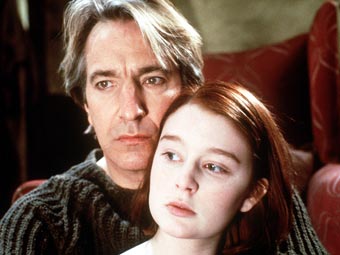
How a Peter Pan-related film starring Alan Rickman and Hugh Grant escaped my attention when it was released, I don't know. It was only when my research for The Stowaway led me to the original version of the story--Beryl Bainbridge's 1989 novel An Awfully Big Adventure--that I found there was a 1995 movie version as well.


Directed by Mike Newell in a sharp turn away from the levity of his 1994 Four Weddings and a Funeral, it's the story of 16-year-old Stella Bradshaw, who, having no other career interests or aptitude, goes to work for a struggling Liverpool theater company. Stella is romantically inclined toward Meredith Potter, the theater's director (Hugh Grant), never seeing that his interests are otherwise inclined. It's the attention of another actor altogether that she attracts, and reciprocates to some extent. Stella is obtuse, self-interested, stubborn, and often hilarious. She's also confident and calculating in a way that ensures her survival in this group of other self-interested and highly dramatic people.


"The best Captain Hook there has ever been," one of the troupe says of P.L. O'Hara (Alan Rickman), the famous actor who returns to Liverpool to take the place of an injured troupe member--and also for reasons of his own. While I'm personally partial to Jason Isaacs' 2003 movie Hook, and would never be able to forget I was watching Rickman, I can't deny his Shakespearian appropriate for the character in J.M. Barrie's play. And I can certainly see O'Hara's appeal to various members of the theater company. As well, there's a gravitas to Rickman's O'Hara that brings across the bittersweet nature of the text.

The movie makes reference to O'Hara playing Richard II on stage, which dovetails with Rickman's character Alexander Dane in 1999's Galaxy Quest, an actor bitter that his success comes from his time on a TV space adventure rather than because of his stage portrayals of Richard III. Rickman himself studied Shakespeare with the Royal Academy of Dramatic Art. And it was with the Royal Shakespeare Company that he played the Vicomte de Valmont in Les Liaison Dangereuses in 1985, which led to a Broadway run and a Tony Award nomination.  While Rickman may be best known as a film actor, he also enjoyed great success on the theatrical stage--not unlike P.L. O'Hara.


In some ways this story is better suited for the book, which received a Man Booker Prize nomination. Some of the important plot developments become Hollywood-ized in the movie in a way that robs them of their full impact and emotion, and Bainbridge's black humor is sometimes lost to sentimentality. It's one of the few short novels that I don't think skimps on character development--in fact, I think Bainbridge's sometimes acid approach works to flesh them out in a way the film does not. Stella, in particular, is calculating in a way I don't think comes across fully. But the cinematic version has the performances, and they're worth seeing. Hugh Grant plays against his loveable romantic lead persona, and I took notice of Prunella Scales, otherwise  known as Basil Fawlty's wife Sybil in Fawlty Towers, as actress Rose.

Clare Woodgate is a lovely Stella with an interesting story of her own: After being turned down for the role after her first audition, the 20-year-old, middle-class, Essex actress returned in the persona of a 17-year-old redhead from working-class Liverpool named Georgina Cates and read for the part again. Not only did she get the part, she received an Actress of the Year nomination for her performance from the London Critics Circle Film Awards in 1996.

Rickman, director Newell said, wasn't pleased with Cates's dissembling. "He treated Georgina very tactfully, presuming that she was sexually inexperienced and could get upset by the scene. Well, who knows, maybe she was."


I was surprised to realize I'd seen Cates before, in the 1998 movie Clay Pigeons, which I've always thought is underrated and which features a couple of my favorite songs from the band Old 97s. Proving once again that everything in my life seems to circle back around to Peter Pan and Captain Hook and The Stowaway.

An Awfully Big Adventure is also available as an audiobook read by Paul McGann, whom I think would be an excellent Hook actor in his own right, if only he were as tall as the character as described by J.M. Barrie.

Sunday, November 15, 2015

Helping the Peter Pan Manga fly on

Update 11/30/2015: The Kickstarter is funded! But there's another week to go and some stretch goals I'd love to see funded--in particular, more "slice of life" Neverland comics.

Last year, at Emerald City Comic Con, I met and interviewed Elaine Tipping, creator of the Peter Pan manga. Elaine is doing something I wholeheartedly support--using a modern style of art to tell J. M. Barrie's story. Strictly J. M. Barrie--nothing from Disney or Dave Barry/Ridley Scott or Once Upon a Time--just the original.


But that manga was only the first part of the story, and now the Kickstarter for the second part has gone live. I have to encourage my readers to support this. Because Elaine cares about the original book and making it more widely available for people who are only familiar with retellings of Peter Pan which ignore important parts of the story.


And she's filling in some of the adventures that Barrie only hinted at, which I have been enjoying thoroughly, and which I've never known anyone else to do. The new manga will have even more of those--ten four-panel comic stories. Wendy plays a large part in these adventures, and animals and fairies too.


But perhaps most importantly (said the blogger with a wink), Elaine has a proper appreciation for Captain Jas. Hook and does not treat him like a buffoon. Probably because she's read the book.


The Captain Hook Kickstarter reward level includes two keychains, two postcards, a digital illustration, my name in the book... Look at that face. You wouldn't want to deprive me of that, would you? I thought not.

Wednesday, February 11, 2015

The Mystery of the Red Coat

A year and a half ago, I thought I had found the first instance of Captain Hook in a red coat--illustrations by American Roy Best from 1931. Before then, Hook was depicted in coats of blue and gray. Of course, since the 1957 Disney film (which went into development in 1935), he's generally depicted wearing red.

But now I've learned that British painter Gwynedd M. Hudson had the same idea as Best at around the same time. As Hudson is one of my favorite Peter Pan illustrators, I'm glad now that I decided Jas. should have not only his original blue and gray coats, but red. (Although in The Stowaway, they are reserved for battle and other important occasions.)


 James, splendid in his red coat.


I'm amused how well my characterizations of the crew align with Hudson's.

My visit to the Marchpane children's bookshop at Charing Cross in London turned out to be edifying in this regard. Not only did I get to hold a 1904 first edition Peter and Wendy (with appropriate whimpers and hopes of "someday"), the seller also had a 1931 Hudson first edition with dust jacket (those don't usually survive) which now lives at my house. That was a fantastic surprise.


I have several versions of Peter Pan that include Hudson's illustrations, reprinted in a single color. I knew from pictures I'd seen online that some of the originals were in two or three colors--but in the first edition Hudson, there are many full-color illustrations as well.


It turns out to be almost impossible to find information about Hudson online. However, Antiques Atlas has a profile that gives me far more information than I've been able to find before:

Gwynedd May Hudson, 1882-1932, was a Sussex artist, who studied at Brighton College of Art. She exhibited a painting at the Royal Academy in 1912, but is best know for her much loved illustrations of Alice in Wonderland in 1922 for Hodder & Stoughton and Peter Pan and Wendy in 1931, also for Hodder and Stoughton.

She also did a series of posters for the London Underground 1926-1929, copies of which are in the London Transport Museum. One of these lithographic posters of 'The Zoo' for the Underground achieved a price of £2,750 at Christie's in 2012.


Most sources give Hudson's date of birth as 1909. She might have been a prodigy who published Alice in Wonderland illustrations when she was thirteen,but it's unlikely she exhibited at the Royal Academy at the age of three. I'm also glad to know she didn't die at the age of 33.


Hudson seems to be best known for her Alice paintings.These are easily found reproduced online and for sale from auction houses, and even on mugs and t-shirts.

Thursday, February 27, 2014

Ten facts about Captain Hook

As promised! More Captain Hook in the blog this year. (Such a burden.) Some of these details were previously chronicled by J.M. Barrie, while others have been revealed as I work on The Stowaway. (Sources at the end.)

1. Peter Pan has convinced himself that he cut off the hand of Captain Jas. Hook and threw it to the Neverland crocodile. [1] The truth, however, is more complicated and sadder, and took place long before the two met. [3]

2. Books from the Eton library, inscribed with the name "Jacobus Hook," can still occasionally be found in second-hand bookstores. [2]


3. James Hook does fear the crocodile, but no more than he would any large and deadly creature. [3]


4. His hatred of Peter Pan results from the boy killing his men without remorse, tormenting him ceaselessly, and being irrepressibly cocky. [1,3]


5. James Hook is an inveterate clothes horse. The red coats for which he has become known are his battle coats, and the time of The Stowaway, he has three. For regular seafaring, he wears blue or gray. [3]

6. He has patterned his appearance after King Charles II, most spectacularly in the long black ringlets in which he wears his hair. [1] While many artists--mostly post-Disney--depict him in stockings and knee-breeches, he learned early on that such dress was not practical for piracy. [3]


7. Hook's eyes are the blue of forget-me-nots. [1] Barrie describes him as "blackavized" [1], or swarthy. Perhaps this coloration can be traced to his Welsh ancestry. [3]


8. His black hair comes from his mother's side of the family, while the chin he near-despises is a legacy from his thoroughly-despised father [3].


9. James Hook was a (largely unwilling) boy soprano. [3] He also played flute [2] and harpsichord. [1]

10. The Captain detests fiction, feeling that he gets enough make-believe during the time he spends in Neverland. Rather, he prefers histories for the understand they give him of the larger world. [3]


Bonus: The ship the Captain sails at the time of Peter Pan and The Stowaway is the third incarnation of the Jolly Roger. [3]


Sources:
[1] Peter Pan, J.M. Barrie, 1911
[2] "Hook at Eton," speech given by J. M. Barrie in 1927
[3] The Stowaway, by your blogger, still in progress

Thursday, January 16, 2014

Blue fruit

As requested--no, really--a short vignette that didn't make the cut for The Stowaway, but which manages nevertheless to work in several themes of the book. We begin with Captain Jas. Hook speaking to Vivian Drew.

"We need to replace the oranges those wretched boys stole. Care to accompany me to the island?"

It couldn't be much more dangerous than the ship had been recently, I thought, and agreed, provided we could stay within hailing distance of the Jolly Roger. So after a brief stop at the cabin for hats (the lesson had finally taken), we took possession of the dory.

"We're rowing ourselves?" I had never thought to see James take this duty on.

"We can hardly do a worse job than some of our compatriots," he said, a point I could not argue.


This is Koh Samui, Thailand, not Never Neverland, but the resemblance is notable.

The sea was calm and the afternoon windless. We left the dory in a small cove and set off along the powdery sand of the beach, picking our way carefully through a crowd of tiny spotted birds intent on dining from shells and strands of rotting seaweed. 

"Look up, Viv. Mr. Smee says they're delicious." I followed his gaze to the feathery leaves of a pale-barked tree and a cluster of fruits tucked within, something like plums but with skins of turquoise blue.

I shaded my eyes with my hand and frowned. "Pretty enough, but we shouldn't eat them."

"They didn't hurt Mr. Smee, Viv, and they won't hurt us."

“Didn't your mother ever warn you about blue food?”

“It's a wonder my mother didn't encourage me to eat it.”

I shook my head, but squeezed his forearm to acknowledge the real mistrust that lay beneath his words. Probably my own parents wouldn't have even noticed if Miles and I had poisoned ourselves on blue food, as long as we'd ultimately survived.

“You don't eat blueberries?” James asked.

“They're more purple than blue," I pointed out.

He waved aside my further protests, plucked one of the fruits, and sliced it open with his deck knife. The flesh inside was as blue as the rind, and crunched like an apple as he chewed. Curiosity won out over caution as he presented to me another slice upon the point of his hook, and I bit into it with only a moment of hesitation. 

“It tastes somewhere between an orange and a lemon,” I said in surprise.

“I wonder if these would be any protection against scurvy. Probably best not to chance it.”

“Probably best to see if we survive the remainder of the day after eating them,” I said. “Assuming we don't die at the hands of the lost boys or the teeth of the crocodile.”

Neverland, according to the 2003 film adaptation of Peter Pan

“I have made you dismal, haven't I?”

I thought for a moment. “No, not much more so than I have always been.”

“We are distressingly well-suited for each other, then."

“Agreed.” I took another bite of the blue fruit.

“There are worse ways to die than this,” he said.

“If a person is looking for one.” I wiped my hand on my skirt and sat down carefully in the coarse grass at the base of the tree, leaning against the trunk and closing my eyes.  “Take the first watch, will you, sir?”

“As the lady commands,” he said, but belied his words when he reclined beside me and rested his head in my lap.

“Hmph,” I said sternly. But I was already stroking his hair, and I doubt anyone of our acquaintance would have believed I truly objected.


Wednesday, January 1, 2014

Revelations in word clouds

This little cloud of letters is called a wordle, and it comprises the most commonly used words in this blog. ("Paste link into your blog" did nothing of the sort, so you get a scan here, plus the link above if you want to try your own.)


 I suppose I can live with BOOK as my most prominent word. As I ran this, I had a fear that a giant PETER would appear in the middle, causing me to rethink my entire policy of even-handed journalism. But at least CAPTAIN is nearly as large, and HOOK makes a decent-sized appearance too--next to TIME, an unintentionally appropriate connection. I think the entirety of the cloud does point to what I'm hoping to accomplish both here and in The Stowaway--especially with the large RESPECT in the center--which is encouraging.

Still, it's obvious what my blog's New Year's Resolution needs to be.


No, wait, that's not quite what I meant.


More Captain Hook in this blog in 2014. Think I can manage that?

Tuesday, November 19, 2013

Defending the Captain

Sort of a Part II to this post from last Friday, although I suppose technically it may be Part III or IV by now. Regardless. Onward!

Even if I were less of a purist about Peter Pan, there was no way I could appreciate the "Peter and the Starcatchers" book after its description of Hook, who at the time of the book is known as Black Stache.  And even if I weren't so deeply immersed in the world of James Hook as originated by J. M. Barrie for my work on The Stowaway, I would be insulted by the recasting of this character I have been fascinated by for so long.

And to think I was offended that the Disney film made Captain Hook comedic and inept. I have yet to figure out why he would have his desk outside on the ship's deck.

The Stache of the Barry/Pearson books is depicted as repellent and pathetic, and he is made a figure of mockery until I feel like I'm watching school kids bullying the child who comes to school with dirty clothes and poor social skills. I end up thinking I may be glad I didn't grow up with Dave Barry (which is disappointing, as I read his columns happily for years) and Ridley Pearson, which is not a pleasant way to feel about the authors of a book one is reading.

This captain's crew call him Rat Breath. He eats raw meat from the depths of his hideously filthy cabin. He feels pride in nothing but his foot-wide moustache.
"He was a strikingly unpleasant figure, with a pock-marked face and a large red nose, like a prize turnip, glued to his face. His long black hair, greasy from years without washing, stained the shoulders of the red uniform coat he'd stolen from a Navy sailor on the high seas..." 


Black 'Stache from Peter and the Starcatchers, by Greg Call, 2004


James Hook was never like this, not even in the very first productions of the play.


Robb Harwood, 1906 play production. Note the Charles II hair. Also, no moustache.

Gone are the original Hook's Eton origin, elegant bearing, and presumably tragic past. He is no longer even allowed his original appearance. As J. M. Barrie describes him:
"In person he was cadaverous and blackavized [dark faced], and his hair was dressed in long curls, which at a little distance looked like black candles, and gave a singularly threatening expression to his handsome countenance. His eyes were of the blue of the forget-me-not, and of a profound melancholy, save when he was plunging his hook into you, at which time two red spots appeared in them and lit them up horribly....He was never more sinister than when he was most polite, which is probably the truest test of breeding; and the elegance of his diction, even when he was swearing, no less than the distinction of his demeanour, showed him one of a different cast from his crew."


Flora White, 1921

Or for that matter,  the descriptiong given by "Old Etonian Mr. G.F.T. Jasparin":
 "I do not merely mean that Etonian was written all over him; there was something even more than that, as if (may I venture) he was two Etonians rolled by the magnanimous Gods into one. In a word the handsomest man I have ever seen, though, at the same time, perhaps slightly disgusting." ("Hook at Eton," 1927 speech by Sir J.M. Barrie)

I can work with this (and I do). Even with the "slightly disgusting" part, because opinions vary.

The elegant, compelling Hook, in this case as drawn by Maxim Mitrafanov. If you see a copy of this book for sale anywhere, be a dear and let me know. I've been looking for this one for months.

Really, for Disney books, this depiction has little to do with the Disney Villain version of Hook. The play version of Black 'Stache, at least, could segue into the Captain Hook of the 1953 Disney animated film without too much of a stretch.

John Sanders as 'Stache with Joey deBettencourt as Boy

But not the Black 'Stache of the books, who just makes me sad.

Friday, October 4, 2013

Hook vs. Hook

It's hardly a secret by now that I gnash my teeth over portrayals of Captain Hook that clash with the original by J.M. Barrie (possibly I need a bumper sticker that reads "Barrie is my co-pilot.") And ABC television's "Once Upon a Time" has provided rant fodder for me in general for its fast-and-loose handling of classic stories. When the show added Captain Hook to its roster (well after I had started The Stowaway), my objections suddenly became more personal.

The TV Hook is Captain Hook in, er, name and hook only. And actually not even in name. Somehow on the way to the small screen, Captain Hook became Killian Jones. (Admittedly, if he turns out to be related to Davy Jones of "locker" renown, I will applaud a job well done.) I've accepted that--for the most part. But the more I watch--and I feel compelled to watch just so I know what's being put out there--the more I think OUaT's Captain Hook is actually Long John Silver.

Robert Newton as Long John Silver with Bobby Driscoll as Jim Hawkins in the 1950 film of Treasure Island.

Bobby Driscoll was also the voice of Peter Pan in the 1953 animated Peter Pan. Around we go again...

Both John Silver and Killian Jones form alliances as they are convenient and betray them just as easily. Witness how easily Jones changes his alliances with Regina and her mother Cora, depending on who seems to have the upper hand on him or can most benefit him, as Long John Silver did with the officers and crew of the Hispaniola. And both repeatedly face capture and betrayal themselves, which the original Captain Hook would have found too embarrassing to endure.

Silver murders one of the sailors he recruited to his mutiny with apparently no remorse, and Jones both steals Aurora's heart and shoots her, showing no regret about either. James Hook is described as murdering out of temper (and, I argue, sometimes that reaction could be considered justified), but not for manipulation.


Colin O'Donoghue's Hook with Dylan Schmid as Baelfire, the son of Hook's beloved Milah.

Most significantly, perhaps, Jones and Silver have a fatherly side which is completely absent in James Hook. Silver's mentorship and eventual protection of Jim Hawkins are the only demonstration that there is more to the man than duplicity and greed. Jones craves a fatherly relationship with Bae even to the point of sailing to retrieve Bae's son Henry from Neverland, a place Jones swore he would never return.

By comparison, James Hook's relationship with children can be summed up as follows.

F. D. Bedford, 1911

I wonder often if the writers of OUaT have a good knowledge of their source material and are using it as a starting point, or if they genuinely have only the barest conception of their characters' origins. Given that this is a Disney property and all the characters have been featured in Disney films, I'm going to go with the first and hope I'm right. It baffles me sometimes, though, how far afield they go from the original conceptions. I suppose my concern is that people without background in fairy tale lore will take these as the final word, and not be open to other interpretations--including those which are written with the utmost concern for keeping to the spirit and word of the original. It's personal, in other words.


Thursday, June 20, 2013

Slouching towards Eton

Even without the existence of "Hook at Eton," it would be easy enough to know the Captain's school affiliation merely because "he still adhered in his walk to the school's distinguished slouch." I find no mention of the slouch in current discussions of Eton, but in the Edwardian era it seems to have been a standard association with the school. J.M. Barrie attended Eton, as did the Llewellyn Davies boys around whom the stories of Peter Pan first cohered, so the slouch would have been common knowledge among them. Of course, I do not share that history, but neither does Vivian Drew, and so we can look through the window from the outside and shake our heads together in perplexity.

In Orwell: A Life, D.J. Taylor describes a first encounter with the slouch by George Orwell's close friend Anthony Powell: "Staring out of his study window a day or two after his arrival, Powell observed a boy of about fifteen coming along the far side of the street. One hand was in his pocket. The other supported a pile of books against his thigh. The boy's top hat--these were de rigeur until the 1940s--pushed to the back of his head, was no less startling than his exceptionally short trouser legs and light-colored socks. One of his shoulders was higher than the other. This, together with a slight sag at the knees, produced a perfect specimen of what was known as the 'Eton Slouch.'"


I picture the poor Captain, after years of carefully preserving a posture that is one of last relics of his upbringing, suddenly learning that to his crew it simply appears that he is compensating for an injury--a fact he learns only when Vivian asks with concern if his shoulder pains him. (This also explains why he wears ridiculous socks. Somehow I knew he did.)

Might the Monty Python Ministry of Silly Walks sketch have been born as a parody of the Slouch? A friend and I have our suspicions. I haven't found any direct evidence, but Graham Chapman did attend Eton, and all the members attended either Oxford or Cambridge.*

George Orwell was ambivalent throughout his life about his scholarship presence at Eton, but it was not entirely unsuited to him. Taylor describes the school as "..a highly unusual place: a magisterial collective entity full of secret obscure fiefdoms; unfailingly orthodox in its make-up but quietly sympathetic to more maverick elements"--a perfect place, in other words, for the boy who would become James Hook.

Add to that Taylor's description of the boys in Pop, the elite self-elected Eton Society made up of around twenty-eight students of whom Hook was one, "who acted as prefects and possessed certain privileges, usually in the field of recherche' dress styles." Recherche': Sought out with care, arcane, of studied refinement or elegance--yes, dressing like Charles II fits those attributes nicely.

*The BBC (October 20, 2012) reports that a third of the UK's "leading people" went to Oxford or Cambridge and Eton alone educated about 4% of the nation's elite. That group is chock-a-block** with lawyers and diplomats. James has reason to feel that he's let down the side, and Vivian even more reason to resent the system altogether.

After that statistic, we all need some "Eton Rifles" by The Jam.


**A nautical term. Of course it is. (Used of a ship's hoisting tackle: Drawn so close as to have the blocks touching.)


Friday, June 14, 2013

"Hook at Eton"

Ah, Eton College.

Such a key part of James Hook's past and in fact, his entire psychology. This can be gleaned from the pages of Peter Pan, but J.M. Barrie didn't fill in many of the details until 1927, when he gave a speech at the school after being invited by the provost to refute the statement, "James Hook, the pirate captain,was a great Etonian, but not a good one."

Without this additional information from Barrie's "Hook at Eton," I would not know about James's yellow blood, or the shipwreck in Manaus. That he was a member of Pop, the nickname of the exclusive Eton Society. That he had not only held the school close in memory but had gone back to visit in later years. That he favored the poets of the Lake School, such as Samuel Taylor Coleridge and William Wordsmouth. Why a silk hat would be of such importance to him.

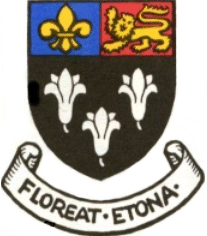
Vivian Drew has her own opinions about the Captain's Eton days. Public schooling goes against her ideas of how children ought to be raised, but she also harbors resentments because her gender and financial position prevented her from having such options. But beyond that, she objects to James holding those memories so close. She believes they provide constant re-injury rather than solace and prevent him from being able to look forward. Oh, how she dislikes that Eton crest tattoo of his, not that she would ever wound him by saying so aloud.


Without a December 2010 article by Brian Till for The Atlantic,  The Secret History of Captain Hook," I might be missing an absolutely key piece of research for The Stowaway. Till's article (recommended reading: it's excellent) led me to the original speech from M'Connache and J.M.B: Speeches, published by Hugh Walpole in 1939. I was lucky enough to find it on books.google.com before it was pulled down, and to get a copy for myself through Questia. It's not an easy speech to find.

I suspect that Renae De Liz has come upon it as well, from hints she has dropped regarding her upcoming graphic novel of Peter Pan, a retelling faithful to the original. (I learned just recently that this will be available primarily to Kickstarter supporters. While I'm pleased to be one of them, I'm sorry this won't be more widely available, both on its own merits and because the original Peter Pan is not as well known as it ought to be.) I hope there are more of us familiar with "Hook at Eton" than I'm aware of. The Captain deserves to have this part of his story better known.

More soon on the "Eton slouch," and also George Orwell.


Friday, June 7, 2013

From the sublime to the--well, mostly just ridiculous

This post comes to you because I was under the impression actor Terry-Thomas had played  Hook in the 50s  and I wanted to compare his picture with Dustin Hoffman's portrayal. Alas, I was misled by something on the internet (yes, I know) and evidently there is no such animal. However, I did find a surprising list of some actors who have played Hook.

Let us begin here.

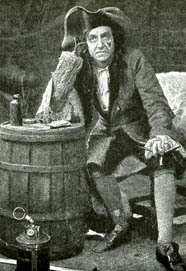
Robb Harwood, 1906


Ian McKellan, 1997

Did you enjoy the sublime? Good, because it's pretty much ridiculous in one form or another from here on out.

Russell Brand with photographer Annie Leibovitz, Disney Parks Campaign
In a way he's perfect. In all the others, he is so, so wrong.

Hans Conreid, voice of Captain Hook in the 1953 Disney movie.
In the ridiculous category because I find this costume particularly suitable for voice acting.


Larry Lamb from Eastenders, 2012

Eastenders, then. And who the heck is Dame Abel Mabel? That's not from any production I've ever seen.


But now, my piece de resistance.
David Hasselhoff, 2012


He's pulling off the look better here, but David. Hasselhoff. I am--I don't know what I am. Bewildered will do. I am bewildered.